Choosing between adjustment of status and consular processing is an important decision in the U.S. green card process. The right option depends on where you are located, your immigration history, visa availability, travel plans, employment needs, and possible immigration-related risks.
Adjustment of status is generally used by eligible applicants physically present in the United States. Consular processing is usually used by people living abroad or applicants who cannot adjust status inside the United States. Because mistakes can lead to delays, denial, or travel restrictions, speaking with an experienced immigration attorney is strongly recommended.
What Is Adjustment of Status?
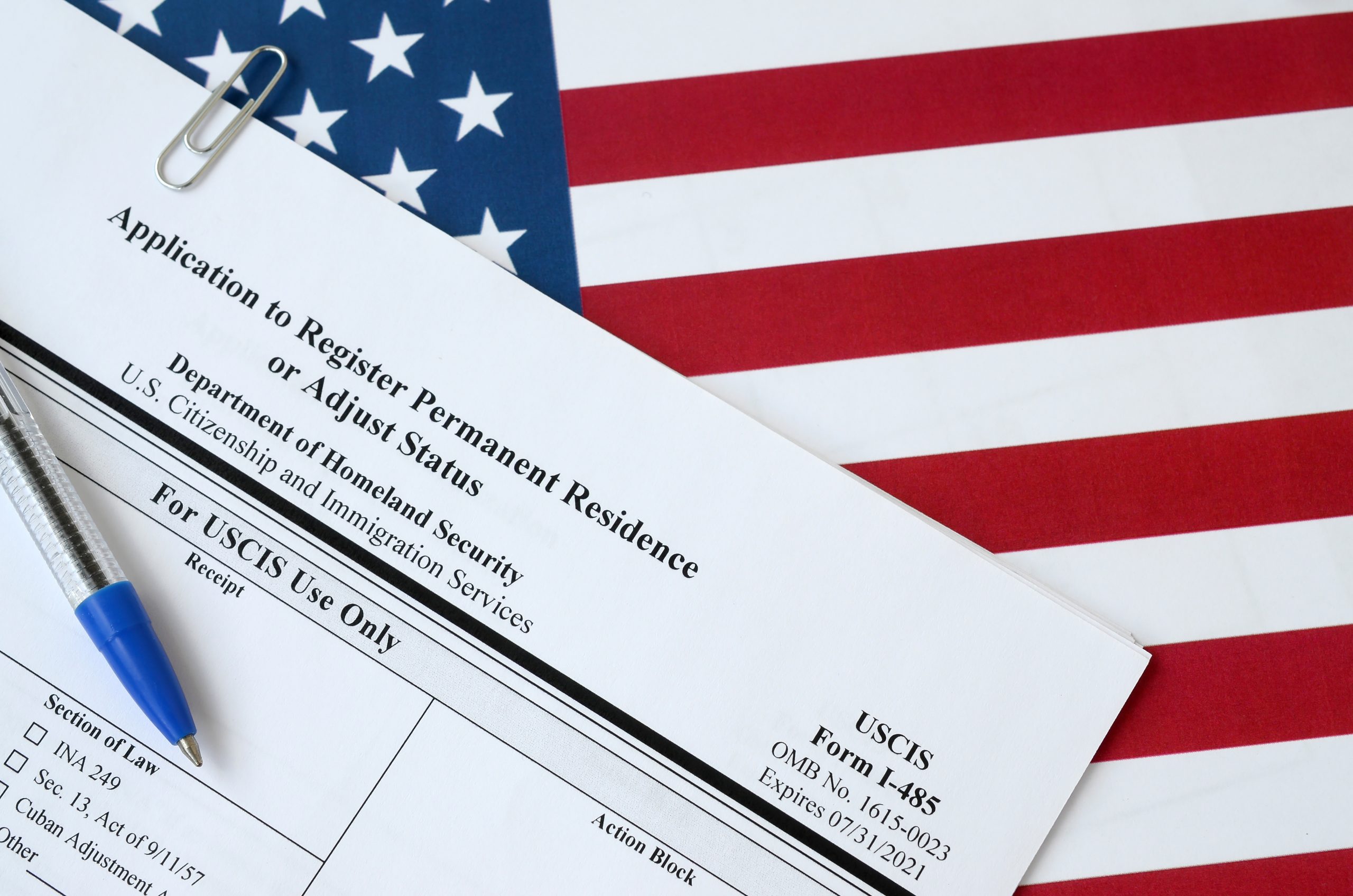
Adjustment of status allows an eligible person already in the United States to apply for lawful permanent resident status without leaving the country for an immigrant visa interview abroad. The main application is Form I-485, Application to Register Permanent Residence or Adjust Status.
Adjustment of status may be available in family-based and employment-based cases. Immediate relatives of U.S. citizens may often file when they meet the eligibility requirements, while preference-category applicants generally need an available immigrant visa based on their priority date.
In some situations, the immigrant petition and adjustment application may be filed together through concurrent filing when the applicant qualifies, and a visa is immediately available.
While Form I-485 is pending, an applicant may also be eligible to apply for:
An employment authorization document, or EAD, using Form I-765.
Advance parole for travel using Form I-131.
However, filing Form I-485 does not guarantee approval. Eligibility may be affected by unlawful entry, immigration violations, unauthorized employment, criminal history, fraud or misrepresentation, removal proceedings, and other issues.

What Is Consular Processing?
Consular processing is the process of applying for an immigrant visa through a U.S. embassy or consulate abroad. It is generally used when the applicant lives outside the United States or is not eligible to adjust status inside the country.
After USCIS approves an immigrant petition, the case may be sent to the National Visa Center, or NVC. The NVC generally creates the case, collects applicable fees and documents, reviews the submission, and coordinates processing with the appropriate U.S. consulate.
The applicant generally completes the immigrant visa application, submits civil and financial documents, completes a medical examination, and attends an immigrant visa interview.
If the visa is approved, the applicant may travel to the United States and request admission as a permanent resident. A Customs and Border Protection officer makes the final admission decision at the port of entry.
Key Differences
Factor | Adjustment of Status | Consular Processing |
|---|---|---|
Location | Applicant is in the United States | Applicant generally lives abroad |
Main agency | USCIS | Department of State and U.S. consulate |
Main application | Form I-485 | Immigrant visa application |
Interview | Usually at a USCIS office | U.S. consulate abroad |
Employment authorization | Applicant may request an EAD | Work generally begins after admission as a permanent resident |
Travel | Advance parole or another valid travel basis may be required | Applicant completes visa processing abroad |
Medical exam | USCIS-authorized civil surgeon | Approved panel physician |
Common risks | Status violations, unauthorized employment, adjustment ineligibility, or travel issues | Unlawful presence bars, inadmissibility, administrative processing, and delays abroad |
These are general distinctions and not a substitute for an individual legal assessment.
Comparing the Costs
Adjustment of status is generally more expensive in government filing fees. Form I-485 costs about $1,440 for an adult applicant. If the applicant also files Form I-765 for work authorization and Form I-131 for advance parole, the total government filing fees may be about $2,330.
For many family-based cases, the immigrant visa application fee is $325 per applicant. A separate Affidavit of Support fee may apply per case, and applicants who receive an immigrant visa generally also pay the USCIS immigrant fee before traveling to the United States. Medical examinations, translations, document fees, and travel expenses are separate.
In both pathways, the underlying immigrant petition, such as Form I-130 or an employment-based petition, may involve a separate USCIS filing fee unless the petitioner or applicant qualifies for an exemption.
Which Option May Be Appropriate?
Adjustment of status may be appropriate if:
You are already in the United States.
You meet the eligibility requirements for adjustment.
An immigrant visa is available, if required.
You can remain in the United States while USCIS processes the case.
You want to request employment authorization or advance parole.
Leaving the country could trigger an immigration problem.
You are an immediate relative of a U.S. citizen and may benefit from specific protections under immigration law.
Applicants should carefully review whether they entered lawfully, maintained valid nonimmigrant status, worked without authorization, or violated the terms of a visa. Some applicants may qualify for exceptions, but not every violation is forgiven.
Employment-based applicants may also need to consider the immigrant petition, labor certification, visa category, priority date, and concurrent filing rules.
Consular processing may be appropriate if:
You are living abroad.
You are not eligible to adjust status.
You prefer to complete the process through a U.S. consulate.
You entered the United States without inspection or admission and do not qualify for an exception.
Your status does not permit adjustment.
Your approved petition is being processed through the NVC.
Applicants who previously accumulated unlawful presence in the United States should obtain legal advice before departing. Leaving after certain periods of unlawful presence may trigger three-year or ten-year bars.
Applicants should also consider family separation, employment disruption, travel costs, interview availability, document collection, and possible administrative processing.

Changing Your Processing Choice
Applicants sometimes change from adjustment of status to consular processing, or the reverse. The change is not always automatic and may require the petition or case to be transferred between USCIS and the NVC.
Changing the selected process can cause delays or require additional filings. Before making a change, applicants should confirm where the petition is located, whether a visa is available, and whether travel or inadmissibility concerns apply.
Common Mistakes to Avoid
Assuming an approved immigrant petition automatically grants a Green Card.
Filing Form I-485 without confirming adjustment eligibility.
Leaving the United States while Form I-485 is pending without understanding travel requirements.
Ignoring priority dates or visa availability.
Submitting incomplete supporting documents.
Failing to disclose prior immigration violations.
Assuming an immigrant visa interview will be scheduled immediately.
Treating processing times as a guarantee.
Missing a USCIS, NVC, or consular deadline.

Get Guidance from Abbasi Immigration Law Firm
Adjustment of status and consular processing can both lead to permanent residence, but they involve different agencies, costs, procedures, travel requirements, and risks. The less expensive option may not always be the safest or most practical choice.
At the Abbasi Immigration Law Firm, we bring years of experience helping individuals and families understand their immigration options. Our team can review your petition, immigration history, visa category, priority date, supporting documents, travel plans, and eligibility requirements before you choose a path.
Contact us to schedule a free consultation.
Frequently Asked Questions
Is adjustment of status faster than consular processing?
Not necessarily. Processing times depend on the USCIS office, visa category, priority date, interview availability, document review, and case complexity.
Can I work while my adjustment application is pending?
You may be able to work after receiving an EAD unless you already have another valid basis for employment authorization. Filing Form I-485 alone does not automatically provide work authorization.
Can I travel while adjustment of status is pending?
Travel can affect a pending adjustment application. Applicants should understand advance parole requirements or other valid travel options before leaving the United States.
Can my family members apply with me?
Eligible family members may qualify as derivative applicants in some family-based and employment-based categories. Each family member must meet the applicable eligibility requirements.
What should I do if USCIS or the NVC asks for additional evidence?
Read the notice carefully and respond by the deadline with the requested information. Missing or incomplete evidence can delay or jeopardize the case.