Traveling internationally in 2026 involves more scrutiny than ever before. Many international travelers, including U.S. citizens, lawful permanent residents, visa holders, international students, and foreign nationals, are surprised when they are selected for additional questioning or secondary inspection at United States ports of entry.
While most travelers pass through primary inspection smoothly, U.S. Customs and Border Protection (CBP) officers operating under the Department of Homeland Security have broad discretion under the Immigration and Nationality Act to determine who may require further review before entering the country.
Understanding what triggers extra questioning at the U.S. border in 2026 can help travelers better prepare and avoid unnecessary delays or denied entry situations.
Inconsistent or Incomplete Travel Information
One of the most common reasons for additional questioning is inconsistency in travel documents or answers provided during primary inspection.
CBP officers may request further inspection if they notice differences between:
Visa applications and current travel purpose
Statements given at the port of entry and electronic records
Travel history and immigration status documentation
Information stored in airline or government systems
Even minor inconsistencies can trigger secondary inspection, where border agents may ask more detailed questions or review supporting documents before allowing entry.

Flags in Immigration or Travel History
Your immigration history plays a significant role in how CBP evaluates your entry under border security protocols.
Extra questioning may be triggered if a traveler has:
Previous visa overstays or denied entry incidents
Prior immigration violations under federal government records
Changes in visa category or status application history
Frequent travel patterns that appear irregular
Lawful permanent residents and visa holders may still face inspection if prior records raise reasonable suspicion under customs enforcement guidelines.
2026-Specific Entry Restrictions
A significant development in 2026 is the entry restriction proclamation, effective January 1, 2026, which places heightened scrutiny on nationals from dozens of designated countries. Travelers from affected countries may face mandatory additional screening regardless of visa type or travel history.
Additionally, ICE agents have been deployed alongside TSA officers at major U.S. airports, meaning immigration enforcement now begins before a traveler even reaches the CBP primary inspection booth. This represents a meaningful shift from prior years, and travelers should be prepared for identity and status verification earlier in the process.

Electronic Device Searches and Digital Screening
CBP officers have legal authority to search electronic devices at ports of entry without a warrant, including:
Mobile phones and laptops
Tablets and external storage
Publicly visible social media profiles
It is important to understand the distinction: CBP can review content already accessible on an unlocked device or publicly visible online. Compelling a traveler to provide passwords or unlock accounts has a higher legal threshold and is more commonly applied in cases where other red flags already exist.
U.S. citizens who refuse to unlock devices cannot be denied entry solely for that refusal. Non-citizens, however, may face prolonged secondary inspection or admissibility concerns if they decline to cooperate.
Security and National Risk Indicators
Border agents may conduct additional questioning if a traveler matches certain risk-based indicators used by Customs and Border Protection and Homeland Security agencies.
These may include:
Travel from certain visa waiver countries under heightened review
Connections to regions flagged for human trafficking concerns or law enforcement alerts
Matches in federal watchlists or border security databases
Suspicious travel patterns identified through customs enforcement systems
In such cases, CBP officers may refer travelers to secondary inspection for further questioning before making an admissibility decision.
Prior Travel Behavior or Border Encounters
A traveler’s past experiences at the border can also influence whether they are selected for additional questioning in the future.
CBP officers may take into account previous secondary inspections, prior entry refusals, or situations where a traveler was unable to clearly explain their purpose of travel. Even if entry was eventually allowed, past uncertainty can lead to closer review in later trips.
In some cases, patterns such as frequent short visits, repeated long stays, or inconsistent travel explanations may also prompt further inspection under border security protocols. These factors do not automatically indicate a problem, but they can lead to additional questioning to confirm that the current travel aligns with immigration rules and stated intent.
Random Selection and Broad Officer Discretion
Not all secondary inspections are triggered by problems or red flags.
Under the Immigration and Nationality Act, CBP officers have broad discretion to select travelers for additional questioning as part of routine border enforcement procedures.
This means travelers may be selected randomly for:
Additional screening
Secondary inspection interviews
Identity verification checks
Document review at ports of entry
This is part of national border security operations designed to maintain system integrity at the United States border.
Even travelers with valid visas or permanent resident cards may occasionally be selected.
What Happens During Secondary Inspection?
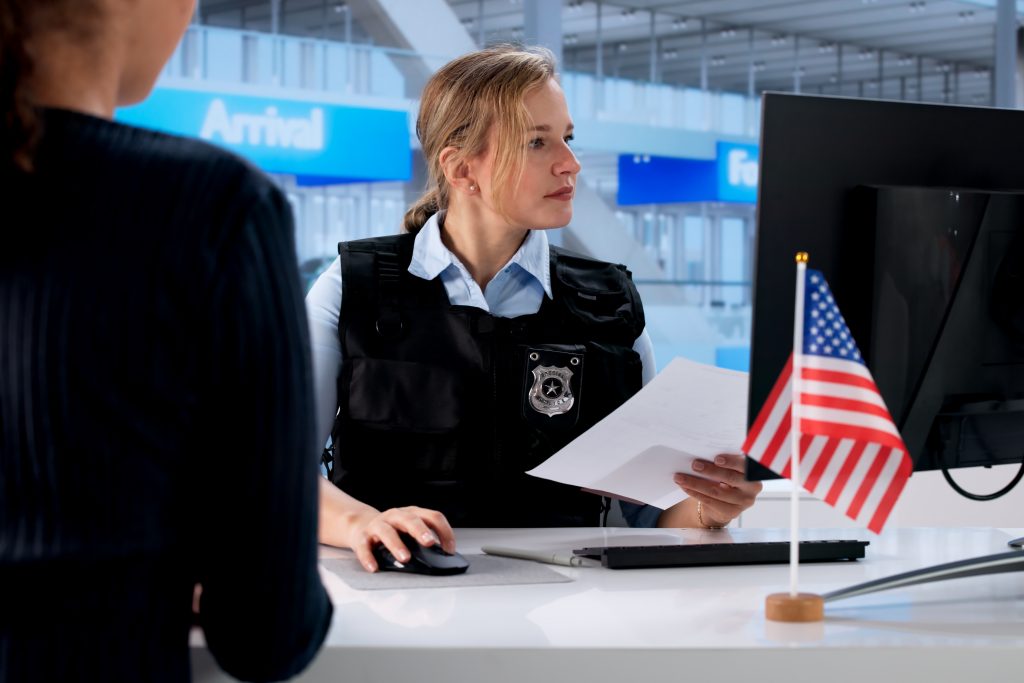
If a traveler is referred for further inspection, they may be taken to a separate area at the airport or port of entry for additional questioning.
During this process, CBP officers may:
Ask detailed questions about the travel purpose
Verify immigration status or visa validity
Review documents and electronic devices
Conduct additional background checks
In rare cases, if concerns are not resolved, travelers may be denied entry or placed into temporary detention while further investigation is conducted.
Most travelers, however, are released after clarification and allowed to continue their entry process.

Your Rights at the U.S. Border
Understanding your rights is important when interacting with customs officers and CBP officers.
Travelers should be aware that:
U.S. citizens cannot be denied entry, but may still be questioned
Lawful permanent residents generally have strong entry rights, but may still undergo inspection
Visa holders and foreign nationals may be refused entry if admissibility concerns arise
Travelers may choose to answer questions, but refusal may affect entry decisions
In complex situations, requesting legal counsel may be appropriate after inspection begins
The balance between border security and individual rights is governed by federal law and immigration enforcement policy.
Key Takeaway
Secondary inspection in 2026 is more common than in previous years due to expanded enforcement, new entry restrictions, and ICE presence at airports. In the vast majority of cases, it does not indicate wrongdoing it is part of a broader system designed to verify admissibility and protect national security.
If you or a family member has experienced border delays, secondary inspection complications, or denied entry, the Abbasi Immigration Law Firm can help you understand your rights and options.
Contact us for a consultation on border-related immigration concerns.