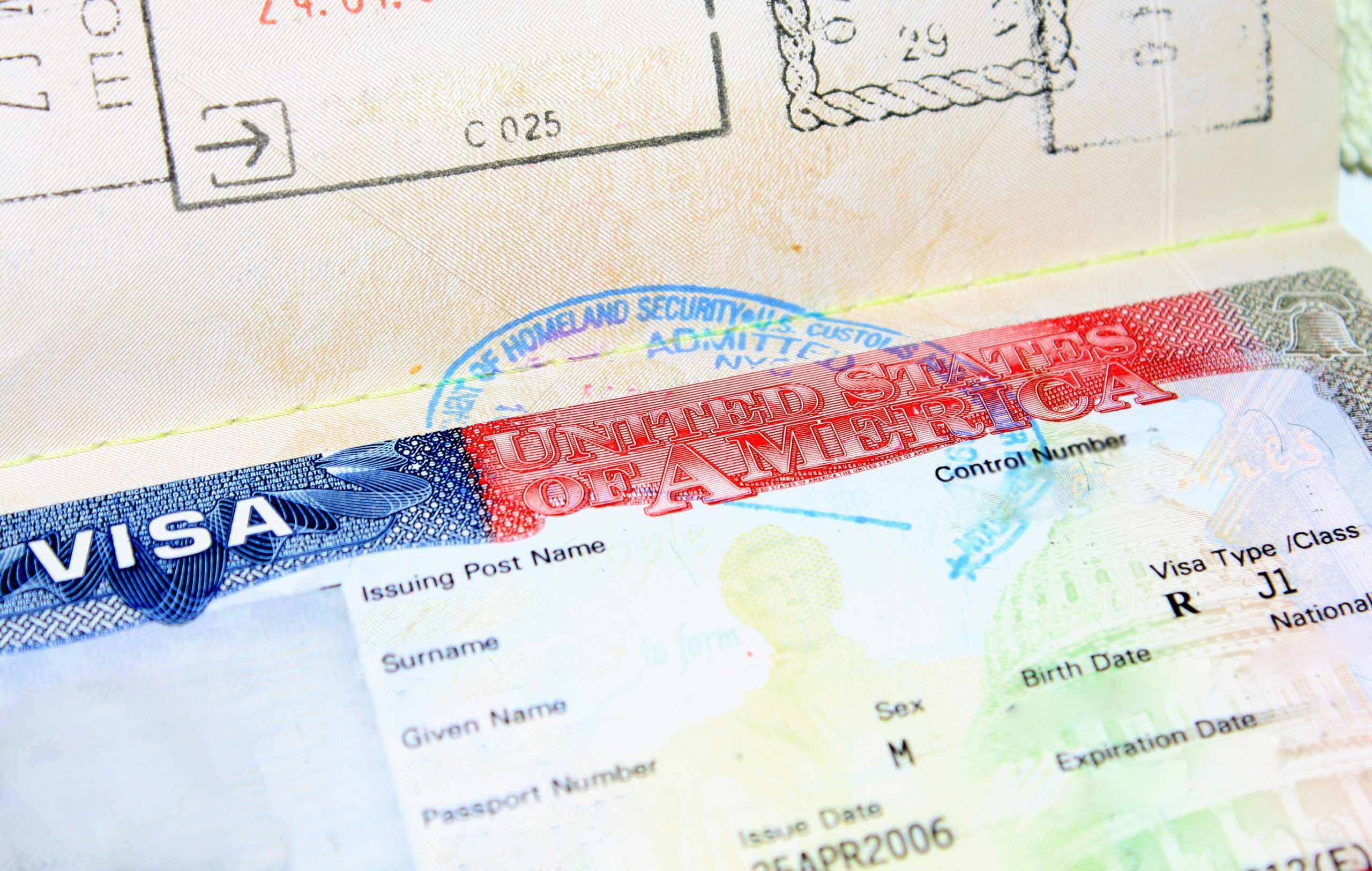
J-1 visa holders may be subject to the 2-year home residency requirement under Section 212(e) of the Immigration and Nationality Act. This requirement obligates certain exchange visitors to return to their home country before becoming eligible for a green card, work visa, or other U.S. immigration benefits.
This article explains what the requirement means in 2026 and how a J-1 waiver may allow you to remain in or return to the United States legally.
What Is the 2‑Year Home Residency Requirement?
Under section 212(e) of the Immigration and Nationality Act, some J‑1 exchange visitors must spend a total of two years in their home country or last legal permanent residence after their program ends. Until that foreign residence requirement is met or waived, they generally cannot receive an immigrant visa, adjust to lawful permanent resident (green card) status, or obtain certain nonimmigrant classifications such as H, L, or K.
You may be “subject” to the residency requirement if any of the following apply:
Your J‑1 exchange program received U.S. government funding.
Your J‑1 exchange program received home government funding.
Your field appears on the skills list for your home country.
You came for graduate medical education or graduate medical training as a foreign medical graduate.
Nonimmigrant exchange visitors should review their J‑1 visa stamp, DS‑2019 form, and program documents with an immigration attorney to confirm whether the 212(e) rule applies.

What Does a J‑1 Waiver Do and Not Do?
A J‑1 waiver (also called a J‑1 visa waiver or 212(e) waiver) is permission from the U.S. government to waive the two‑year foreign residence requirement for a specific exchange visitor. Once a waiver is approved, you no longer need to return home for two years before applying for certain immigration options, such as a work visa, immigrant visa, or green card.
However, the waiver does not by itself grant legal permanent residence, employment authorization, or a new visa status. After a favorable recommendation from the Department of State and a final decision from USCIS, you must still qualify for another immigration classification, such as an H‑1B work visa status, an immigrant visa through family or employment, or adjustment to permanent residence to become a lawful permanent resident.
Overview of J‑1 Waiver Categories
The Department of State recognizes several key waiver categories for J‑1 exchange visitors who are subject to the residence requirement. Choosing the correct category is critical; filing under the wrong waiver category is a common mistake that can lead to delays or denials.
Major waiver options include:
No Objection Statement from the home country’s government
Request by an interested U.S. government agency (IGA)
Exceptional hardship to a U.S. citizen or lawful permanent resident spouse or child
Persecution based on race, religion, or political opinion
State‑sponsored physician waivers (Conrad 30) for foreign medical graduates
Each of these waiver options has a different standard of proof, documentary requirements, and processing times.

No Objection Statement (Home Government Support)
In a No Objection waiver, the home country’s government sends an official statement to the Department of State saying it has no objection to the J‑1 exchange visitor not returning home for two years and to a possible change of status in the United States. This route is most common for exchange program participants who did not receive significant government funding and whose departure is not viewed as harmful to their home country’s interests.
The home government must send the objection statement (more accurately, a no‑objection statement) directly to the Waiver Review Division; applicants cannot submit it themselves. Even if the home country issues a favorable statement, the Department of State still performs its own detailed review and may recommend denial if government funding, foreign policy, or public interest factors weigh against a waiver.
Interested Government Agency (IGA) Waivers
Some J‑1 visa waiver cases are based on support from an interested government agency that believes the exchange visitor’s continued presence in the United States serves the public interest. In these cases, the agency sends a request to the Department of State asking that the foreign residence requirement be waived because of the individual’s work, research, or special skills.
Foreign medical graduates are often eligible for IGA‑based waivers through state health departments or federal programs when they agree to practice in a medically underserved area. These waiver cases require extensive documentation, including contracts, employment details, and evidence that the placement benefits the public interest and addresses health‑care shortages.
Conrad 30 Waivers for Foreign Medical Graduates
The Conrad 30 J‑1 Visa Waiver program is specifically designed for foreign medical graduates who completed J‑1‑sponsored graduate medical education or graduate medical training in the United States. Each state health department may support up to 30 J‑1 waiver applications per year for physicians who agree to serve full‑time in a designated Health Professional Shortage Area or medically underserved area.
To qualify, a physician must generally: agree to work in H‑1B status for at least three years, sign a qualifying employment contract, and provide care in an underserved community or to patients from such areas. After a favorable recommendation by the state and the Department of State, USCIS determines the final decision on the waiver, and the physician can then transition toward longer‑term immigration options such as permanent residency if otherwise eligible.

Exceptional Hardship Waivers
Persecution waivers are for J‑1 exchange visitors who can show they would likely face persecution in their home country on account of race, religion, or political opinion if forced to return for the two‑year period. These waiver cases are similar in some ways to asylum or withholding of removal claims, but they are handled within the J‑1 waiver framework and do not require a U.S. citizen or permanent resident spouse or child.
Persecution claims require strong supporting documentation, such as personal affidavits, expert opinions, and detailed evidence of country conditions and past or threatened harm. Because persecution claims and other waiver categories may interact with broader immigration options and nonimmigrant classifications, it is important to analyze the full strategy before filing.
How the Application Process Works in 2026
In most cases, the application process starts with Form DS‑3035, the J‑1 Visa Waiver Recommendation Application, which is filed online with the Department of State’s Waiver Review Division. The system generates a case number and bar‑coded application, which must be mailed with the required fee and identification documents to the specified address.
Additional steps depend on the waiver category. For a No Objection waiver, the home country’s government must send its statement directly to the Department of State; for an IGA waiver, the interested government agency sends its request. For exceptional hardship and persecution claims, applicants must also file Form I‑612 with USCIS, which conducts its own review before forwarding a recommendation request to the Department of State.
Processing times can vary widely by category and by year, but most waiver applications involve two stages of review, first at the Department of State and then at USCIS, which can take several months or longer. Once USCIS determines the final decision, the exchange visitor can then move forward with next steps such as applying for a work visa, pursuing permanent residence, or changing status, depending on eligibility.
Common J‑1 Waiver Mistakes
Choosing the wrong waiver category for your situation.
Overlooking the impact of U.S. or foreign government funding on eligibility.
Submitting weak or incomplete supporting documentation.
Assuming a waiver approval automatically makes you a permanent resident.
Ignoring timing issues tied to your current status or DS‑2019 expiration date.
Conclusion: Get Experienced Immigration Help
If you or your permanent resident spouse, U.S. citizen spouse, child, or sponsoring employer is considering a J‑1 waiver in 2026, careful planning and a detailed review of your facts are essential. A tailored strategy gives you the best chance of a favorable recommendation and final approval while protecting your long‑term path to lawful permanent residence in the United States.
At the Abbasi Immigration Law Firm, we help J‑1 exchange visitors, including foreign medical graduates, researchers, and professionals, understand their waiver options and gather strong supporting documentation.
Contact us today to schedule a consultation.